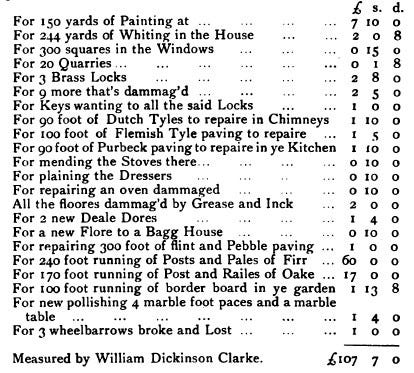
“3 wheelbarrows broke and Lost”
21 April 1698

It’s the 328th anniversary of Peter the Great leaving England for Holland to continue his Grand Embassy (a diplomatic mission to find out how to modernise Russia), at which point everyone breathed a sigh of relief, not least John Evelyn, whose house Peter and his entourage had completely trashed.
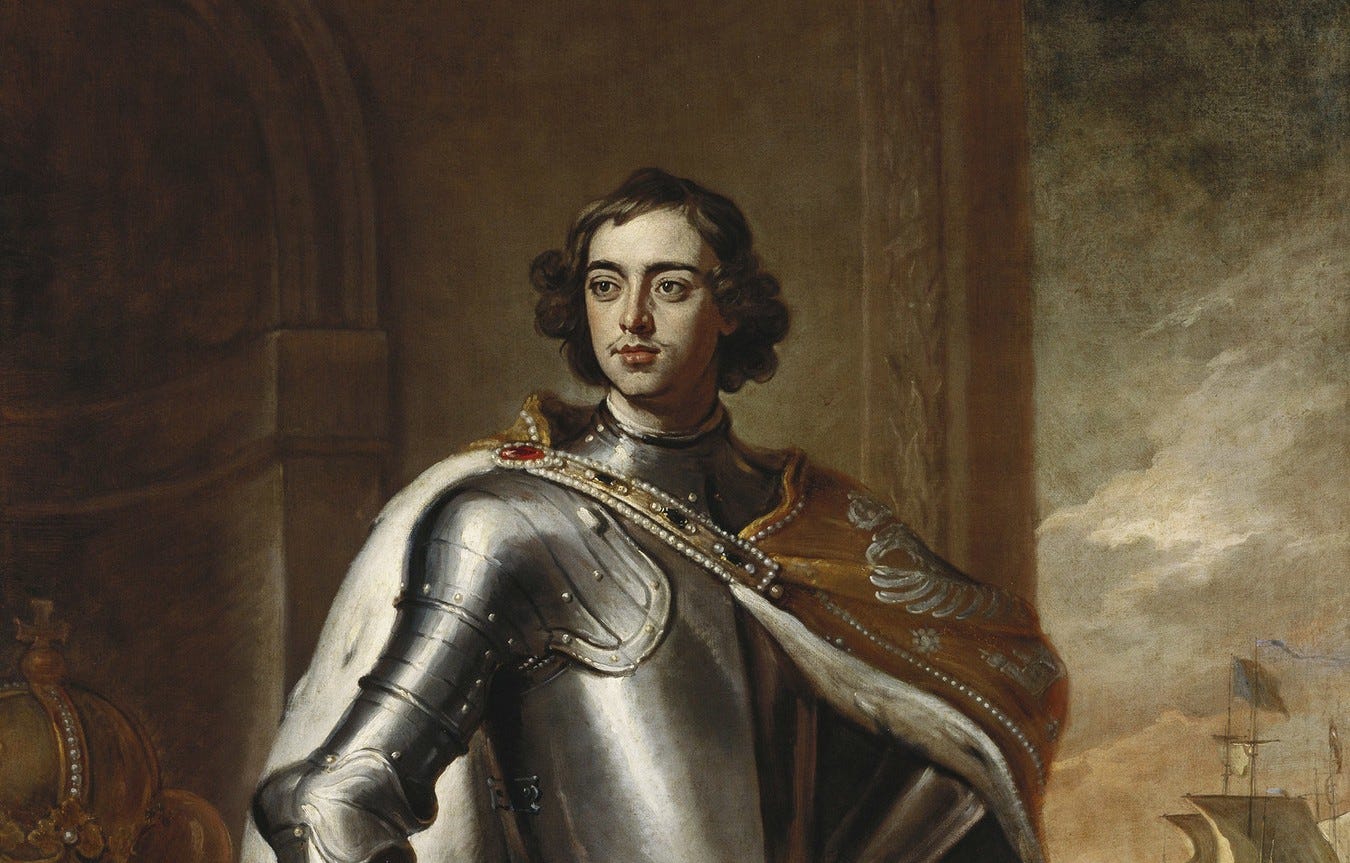
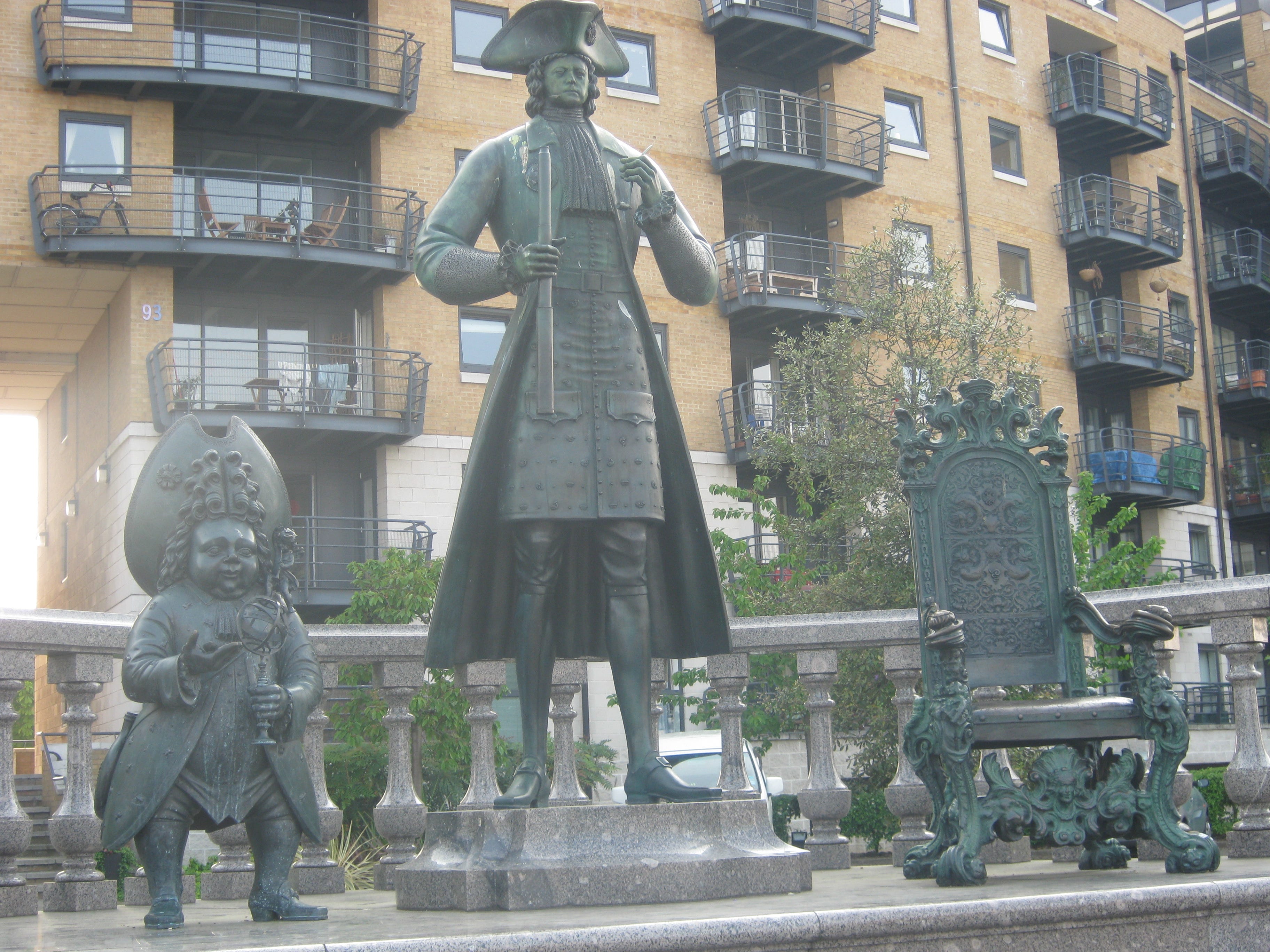
He’d arrived on 11 January, travelling under the name Peter Mikhailov in order to fly under the radar – sort of. He still met the king, and dignitaries such as the Bishop of Salisbury, but not being here in an official capacity meant he avoided the full shenanigans of a state visit.
Most of all, what Peter wanted to do was hang about by the docks. Not to do favours for sailors, but because he wanted to study shipbuilding. He’d come from the Netherlands, where he’d actually worked in shipyards in Zaandam and Amsterdam
He visited visiting the Tower of London, the Royal Society, Greenwich Observatory, factories, a watchmaker, and Kensington Palace (by a back door) – and initially stayed in a small house in Norfolk Street, but wanted to move to Deptford to be nearer the river. The best house for this was John Evelyn’s, but he’d leased it to Captain Benbow, and complained in a letter of “the mortification of seeing, every day, much of my former labours and expense there impairing, for want of a more polite tenant”. Little did he know...

Benbow was persuaded to vacate the house, and Peter moved in. History Today says his interests were practical: ships, watches, “an instrument in the royal apartments which showed the direction in which the wind was blowing” – but he did also have an appetite for letting his hair down.
Peter was just 25, and – at 6ft 7 – bloody enormous, which may account for his enormous capacity for booze. An Anglican bishop wrote:
He is a man of very hot temper, that’s soon inflamed, and very brutal in his passions. He raises his natural heat by drinking much brandy, with great application.
The BBC radio show at that link also says a curator at the Ashmolean heard that in one evening “... he drank two bottles of brandy and four of sherry”, and that he was
a very uncouth fellow ... his sword hung as if he had never worn one before. He stooped much. His hands were dirty, and he scratched as if itchy.
Bailiff John Strickland wrote to his employer, poor John Evelyn (the cultivated courtier, diarist, gardener, and co-founder of the Royal Society), to say
There is a house full of people, and right nasty.
Some of the stories about the damage he and his entourage did to the house are apocryphal. It’s alleged that he twatted a hole in John Evelyn’s garden wall, for example, in order to get to the dockyards more easily - and the ‘troublesome tenant’ Substack says the “3 wheelbarrows broke and Lost” in this bill may be down to Peter and friend’s “habit of racing in a wheelbarrow, crashing through John’s beloved hedges” – but adds that there’s no “source for this earlier than Victorian times”, which is very disappointing. But we do know that the bill for the damage came to £350. History Today says:
After Peter’s departure from England, the Treasury on the petition of Benbow appointed Sir Christopher Wren, the King’s Surveyor, Mr. Sewell of the moving wardrobe, and Mr. London, the King’s gardener, to survey Sayes Court. Their report describes the destruction in detail. No part of the house escaped damage. All the floors were covered with grease and ink, and three new floors had to be provided. The tiled stoves, locks to the doors, and all the paint work had to be renewed. The curtains, quilts, and bed linen were “tore in pieces.” All the chairs in the house, numbering over fifty, were broken, or had disappeared, probably used to stoke the fires. Three hundred window panes were broken and there were “twenty fine pictures very much tore and all frames broke”.
Evelyn wrote that he visited “to view how miserably the Tzar of Moscovy had left my house after 3 months making it his court”, but Peter didn’t pay the bill, of course. The Lords Commissioners of the Treasury did that.
Peter went on to be tsar for 23 more years (he’d already been in the post for 16 years by the time of his Grand Embassy), before making himself emperor in 1721, and then popping his clogs in 1725 at just 52 (perhaps not helped by his vast appetites for drinking and shagging).
Still, he did leave behind in Britain one apparent improvement to the landscape: a mulberry tree in Evelyn’s garden (now Sayes Court Park) – although he may not have planted it at all – and something of more debatable aesthetic properties…