A philosophical dissertation on the diving vessel
20 June 1774

A rather tragic anniversary today – depending on (a) how much you enjoy laughing at the misfortunes of others, I suppose, and (b) the philosophical question of the extent to which the passage of time lessens tragedy – because it’s 252 years to the day since the first death in a submarine misadventure.
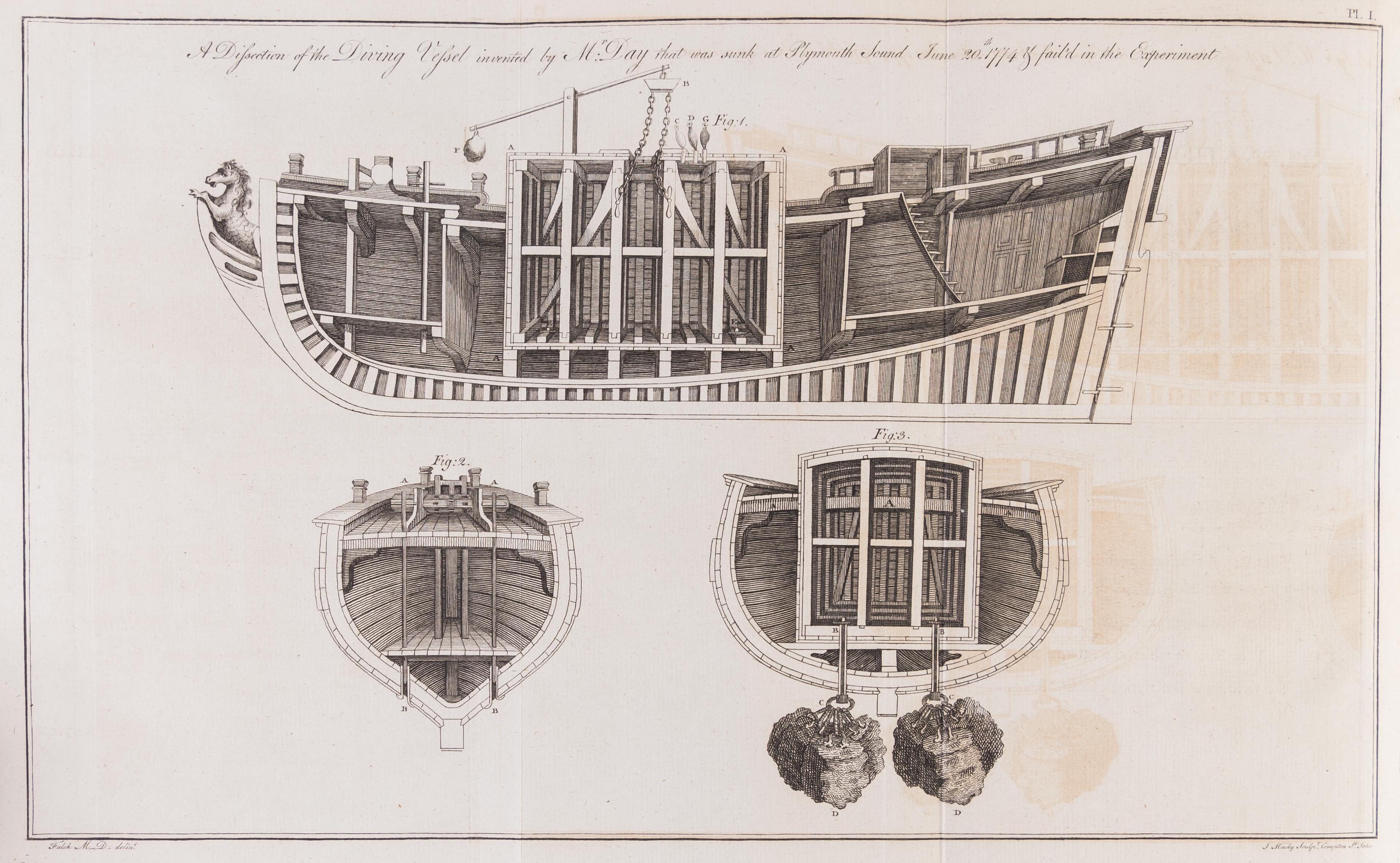
Our unfortunate protagonist is one John Day, variously described as a wagon-maker, a carpenter, and a labourer for a shipwright at Yarmouth, depending on your source, but basically: he did stuff with wood, and seems to have been pretty good at it. What he was not, sadly, was a physicist.
He had a plan, though: to build a submarine and stay underwater in it for a day, taking bets on it, and thus making some good money. Apparently, he tested it with a small boat on the Norfolk Broads – attaching a watertight container, and then sinking the combined vessel while the tide went in and out.
A book called Lost Patrols: Submarine Wrecks of the English Channel by Innes McCartney suggests he “used a pond near Yarmouth to descend to 30 feet”, found “an investor, Christopher Blake”, and devised a plan to “descend to 130ft in full view of the public and stay down for 12 hours”.
Blake, a “notorious gambler” (or “well-known sporting character of the period”, depending on your source), “backed the scheme with £350 and promised Mr Day 10% of all the revenues he would make on the bets”. They chose a date (20 June 1774) and a location – Plymouth – and Day got to work. Dennis Churchill (President of the Nottingham Branch Submariners Association) says:
Day bought an old 50 ton sloop, Maria, and ... constructed a watertight compartment amidships ... and placed seventy five empty hogshead inside for additional buoyancy. Ten tons of ballast was packed into the hold and a further twenty tons was slung beneath the keel which could be released from inside the watertight compartment. He painted the boat bright red and announced that he intended to take Maria down to 300 feet and remain submerged for twenty four hours. Blake hurriedly amended Day’s brash announcement to 130 feet and twelve hours.
Tim Ecott’s book Neutral Buoyancy describes the day itself:
Without fanfare or send-off, Day removed his coat and waistcoat, calling out to the barge captain that he would likely be too warm inside the box. Then, with what an observer later called ‘great composure and confident in his enterprise’, he pulled down the hatch on his wooden box and the barge eased away. The crew of the barge then set about removing the wooden plugs which kept the Maria afloat. Weighted down with stone ballast, she settled slowly in the water. Impatient for glory, Day ordered extra stones to be piled on to the deck to speed up the process. Then, with a shudder, the old ship sank into the Channel, to the north of where Drake’s Island stands guard in the middle of the Sound.
Apparently, Day had a system of three buoys to release to signal distress: one white, to say he was “very well”; one red (“indifferent”); and one black, which meant “very ill”. The SHIPS Project, though, which researches and explores maritime history sites, points out some omissions in his planning:
The external stone ballast was designed to be dropped from the vessel at the end of the dive ... twenty one-ton rocks attached in groups of five to four iron bolts that passed through lead lined holes through the bottom of the ship and in to the air chamber. The plan was to undo a nut on each bolt which attached the bolt and the ballast to the ship, then quickly hammer in a plug into the hole where the bolt used to be. Quite how Day was to undo each nut when five tons of rock ballast was hanging from each bolt is a mystery, as is his method of plugging the hole against the large pressure of water at 30m depth.
Ultimately, though, if the quote with which they begin their account is anything to go by, what happened was... more straightforward:
...but ’tis generally believed that she bursted as soon as she reached the bottom
Nobody knew this at first, of course.
A few minutes after the ship had disappeared, bubbles appeared in the sea above where she sank and was covered with froth for some yards around, seemingly caused by an uprush of air from below. No signal buoy appeared to say how Day was coping with being under water so the onlookers began to get anxious for his safety. Meanwhile, more and more people turned up to watch until the hills overlooking the Sound were covered with spectators. At 2am, the appointed time for surfacing, there was still no sign of the Maria or any buoys released from her. At 7am there was still no sign so Blake asked the captain of the Orpheus and Lord Sandwich to help raise the vessel, thinking that Day would still be alive inside. So for three days 200 dockyard workers manning lighters and lifting cables tried to lift the ship but to no avail. Thinking that Day must now be dead the salvage operation was abandoned.
According to Dennis Churchill, by that stage, the event’s sponsor and bookmaker may no longer have been present: “Blake, sensing disaster, had vanished with the stake money”. Mind you, Day had found him in the Sporting Kalendar, described by marine archaeologist Pete Holt in the Plymouth Herald as “a gambling rag”. Blake, Holt says, “did not have anything to lose but his cash”.
Whatever became of Blake, people did try to find Day. A doctor, Nikolai Detlef Falck, whose previous works had included a ‘Treatise on the Venereal Disease in 3 parts, illustrated with copperplates’, (and some stuff on marine accidents, to be fair) produced A PHILOSOPHICAL DISSERTATION ON THE DIVING VESSEL PROJECTED BY MR. DAY, SUNK IN PLYMOUTH SOUND.
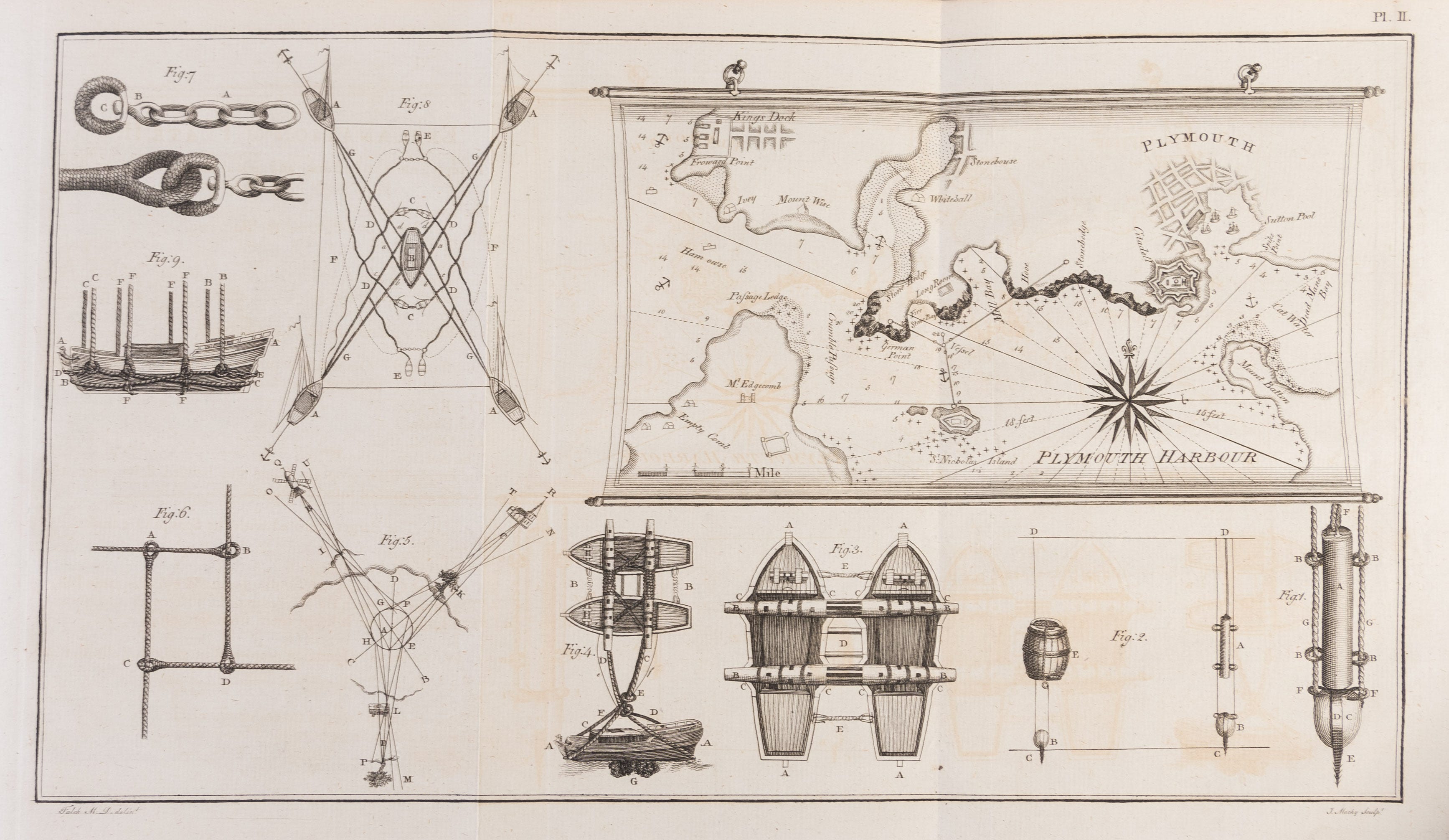
Falck spent most of August trying to retrieve the wreck, but had the sort of results which remind one of Lew Grade’s apparent quote about his film Raise the Titanic: “It would have been cheaper to lower the Atlantic”. What’s left of the Maria, basically, is still there. What’s left, mind you, is not much. Dennis Churchill explains:
Water pressure increases by 15 pounds per square inch for every 30 feet of depth. At 130 feet Day’s boat would have been subjected to more than 60 pounds per square inch and it is highly probable that the Maria broke up long before she ever reached the bottom of the sea.
Or, as Pete Holt told the Plymouth Herald, more succinctly: “The vessel would have imploded. Day would not have known anything about it.” Nor, sadly, would he have been the last person to experience such a thing, although he did have the decency not to take anyone else with him.
Fascinating story!