Odd this day

18 January 1881
Today is the 145th anniversary of a ship called ‘Visiter’ running aground in Robin Hood’s Bay in North Yorkshire, leading to a daring rescue, and two permanent memorials to the event, one conventional, the other… less so. Let’s begin with the story, which appears on the more normal thing: a plaque.
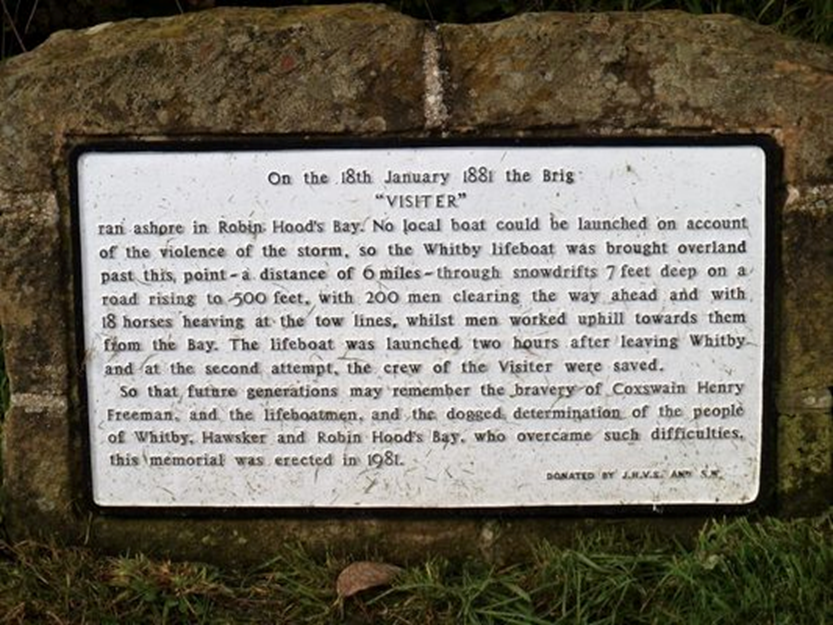
So far, so good. According to Atlas Obscura, the bay doesn’t have an apostrophe in its name, the snowdrifts might have been eight feet deep (rather than seven), and it may have taken three hours (not two) to get the lifeboat where it needed to be, but the facts do seem to be fairly well established. There was a herculean effort of dragging a boat, cutting a path through snow, and generally a lot of heaving and climbing.
The plaque went up “exactly” 100 years later — so, presumably on 18 January 1991 — but six years after the original incident, something much stranger happened.
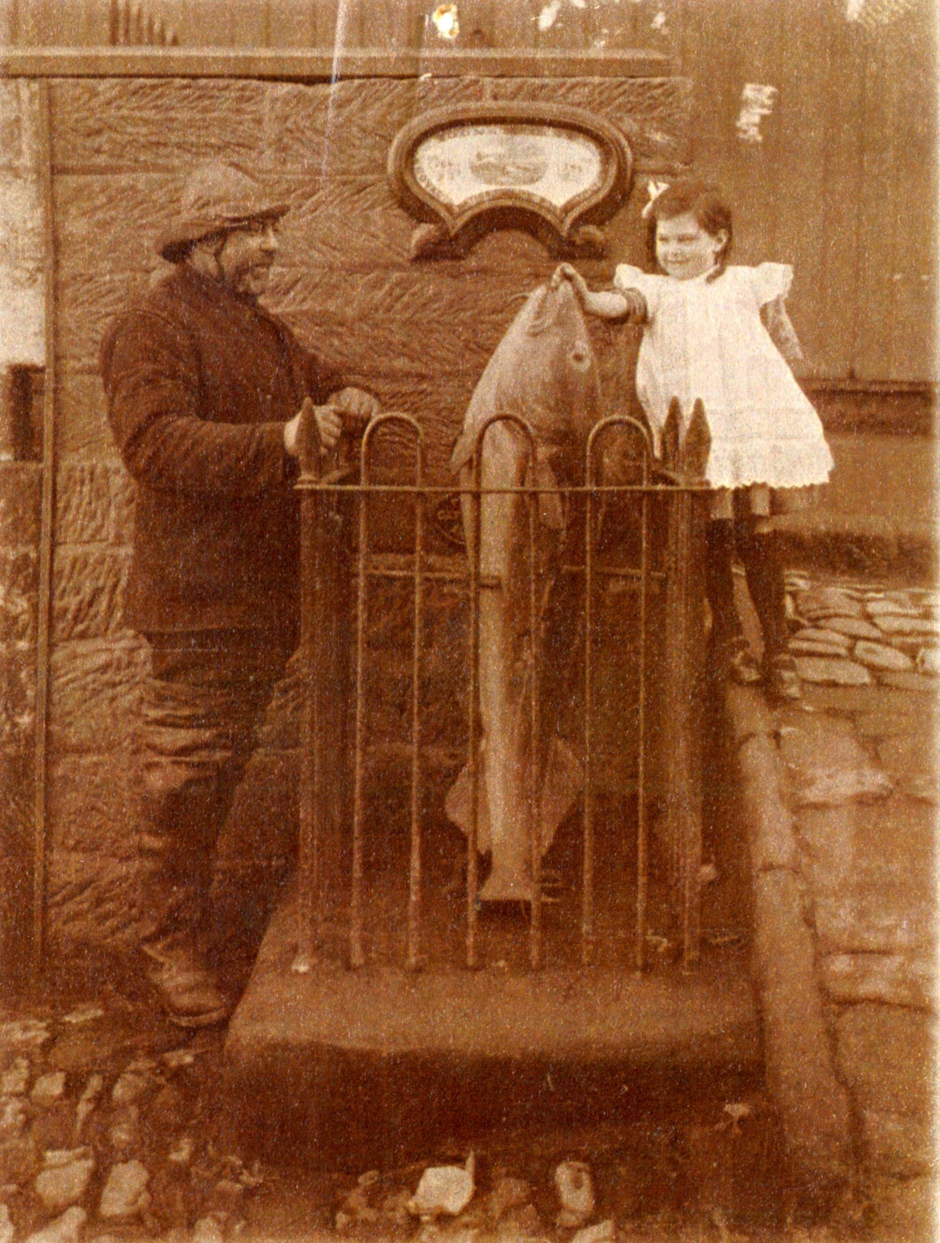
A local ship captain, Isaac Mills and his wife, Alice, presented a cast iron painted sculpture of a codfish to serve as a collecting box for the Royal National Lifeboat Institute.
Yes, a cast iron painted codfish.
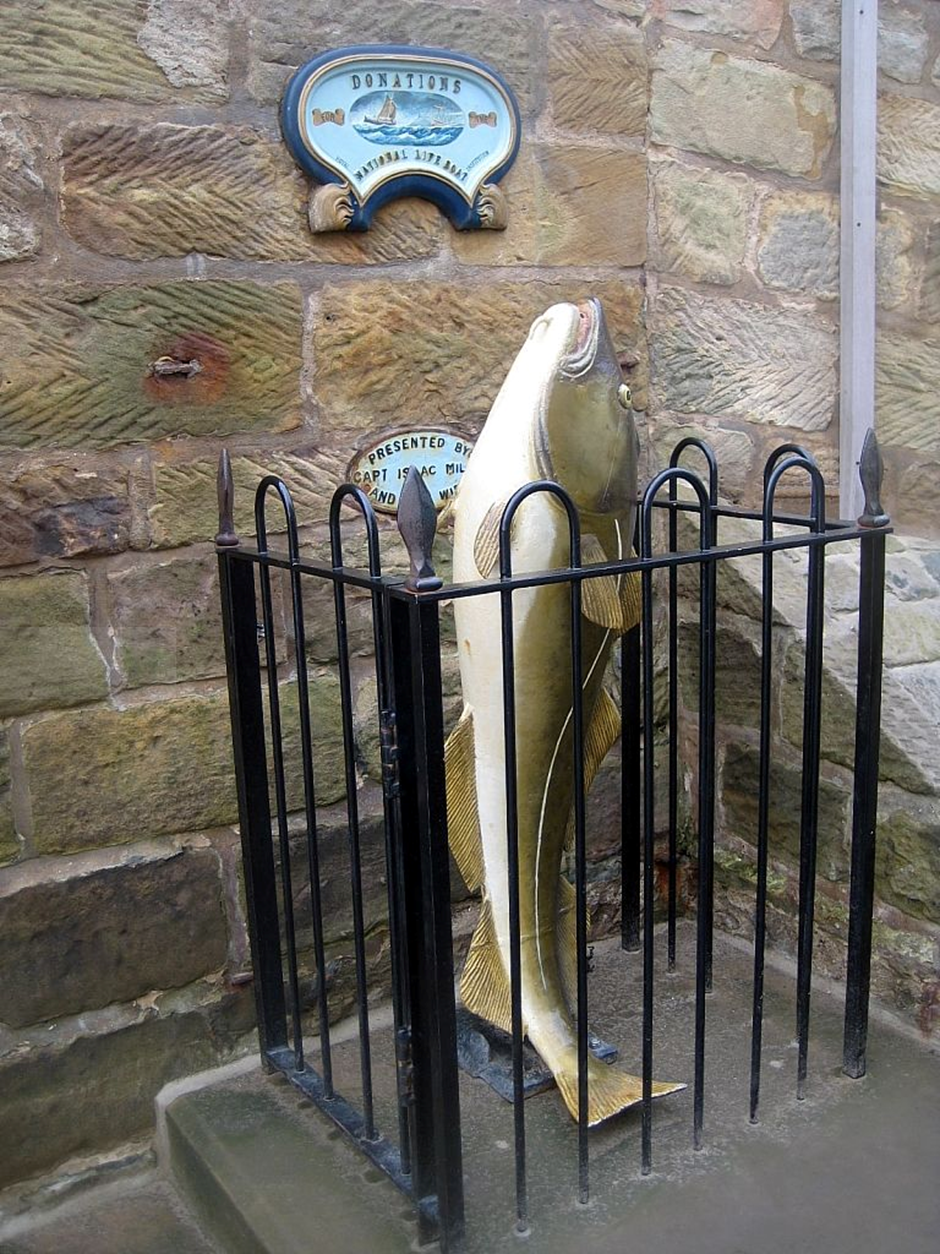
Here’s another angle which shows you more of the plaque behind:
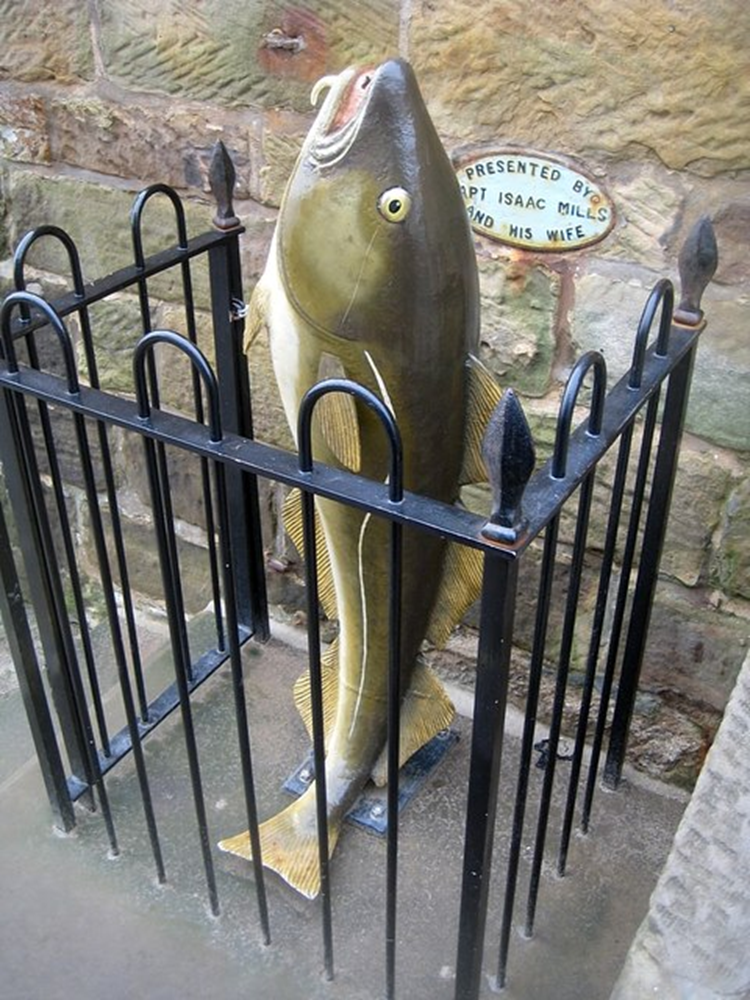
There’s a bit more about the iron fish on the Historic England website, such as the facts that it’s “around 1.2m tall and weighs a just over 110kg”, that its mouth is “a slot for money”, and it’s “a good example of Victorian foundry craftsmanship”. It was “probably made at Batts Iron Foundry (Huttons Works) at Whitby”, fact fans, and is “sited on the south side of the top of the slipway that was formerly used by the village’s lifeboat and fishing fleet”.
Perhaps you think that’s enough facts for now. But perhaps you’re also asking “Why the Historic England website, though?”, and the answer is: because it’s been Grade II Listed since 10 April 2006.
There are photos on the site from the RNLI Archive showing it in situ
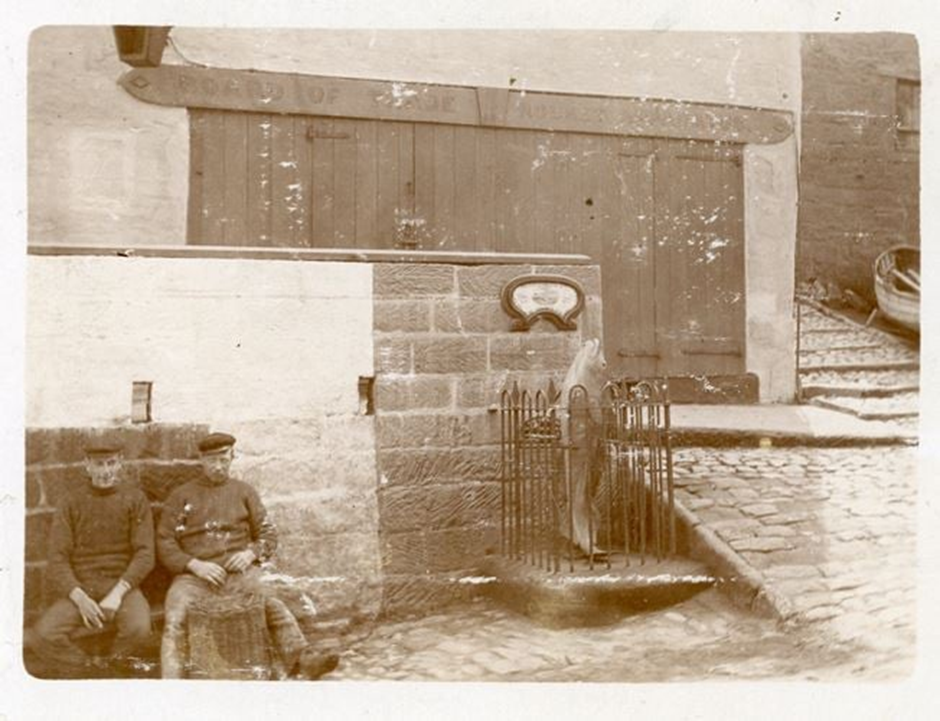
I particularly like the one of “RNLI Robin Hood’s Bay Coxswain Will Storm and young girl, thought to be Gladys Dixon”, who appears to be feeding the collection box with a coin (or possibly just holding its nose). The RNLI says
old fishermen used to encourage youngsters to put a penny in the fish’s mouth by saying it would flick its tail — when it didn’t they were told to try again.
It’s “possibly the oldest collecting box still in service for the Royal National Lifeboat Institution”, and also “the smallest listed structure in the UK” (as well as being “an example of Victorian public statuary and … a memorial to fishermen lost at sea and the bravery of RNLI volunteers”).
So, there’s a thing you know now. You really are most welcome.