Odd this day

25 December 800
Well, it’s Christmas Day, so it must be time to talk about Jesus — specifically, about how on this day 1,225 years ago, Charlemagne, who was in Rome to be crowned Carolingian Emperor, presented Pope Leo III with the very holiest of relics: the Foreskin of Our Lord.
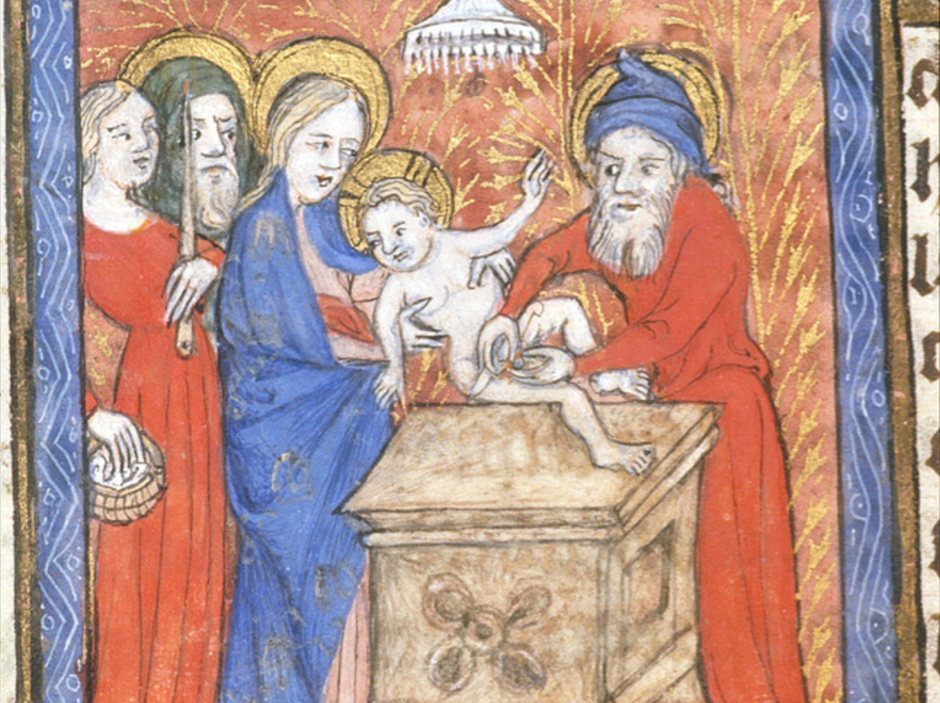
Because, of course, in the times when relics were taken seriously, there was a holy foreskin. Jesus was Jewish, so would have been circumcised, and — what with the angel having appeared to Mary and her being a virgin and all that — they knew he was special. So they saved it.
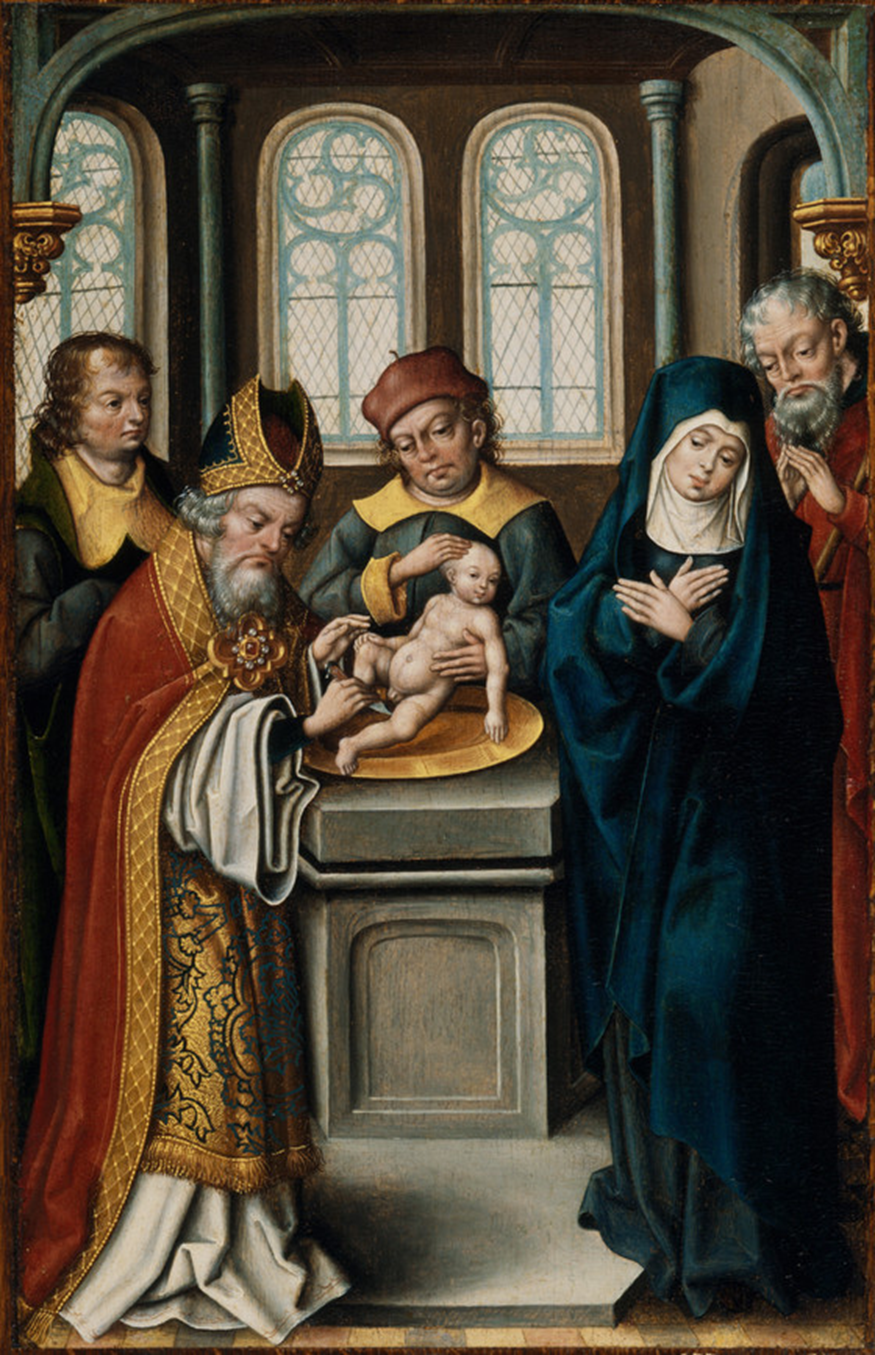
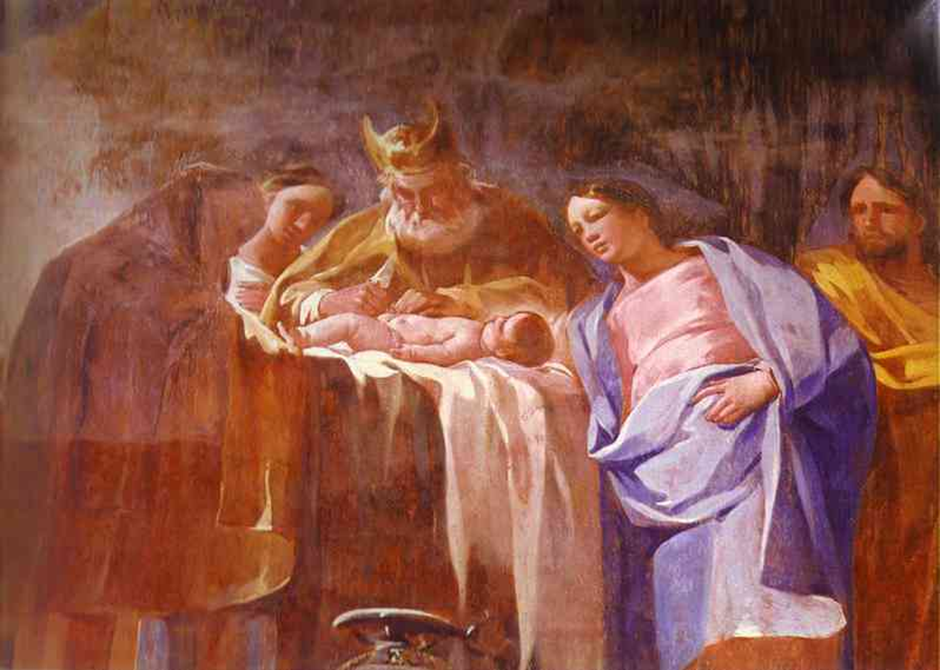
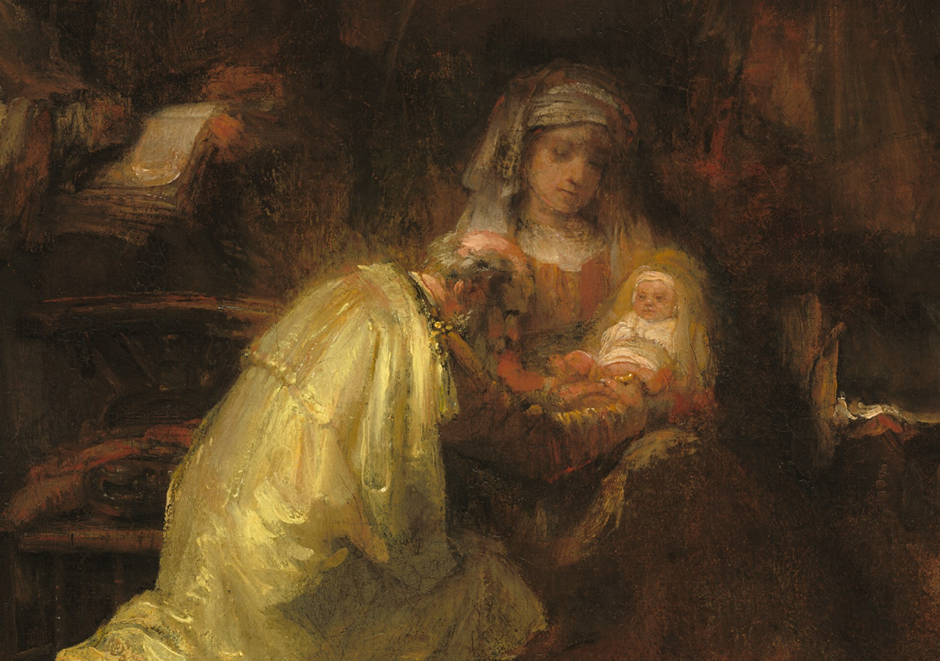
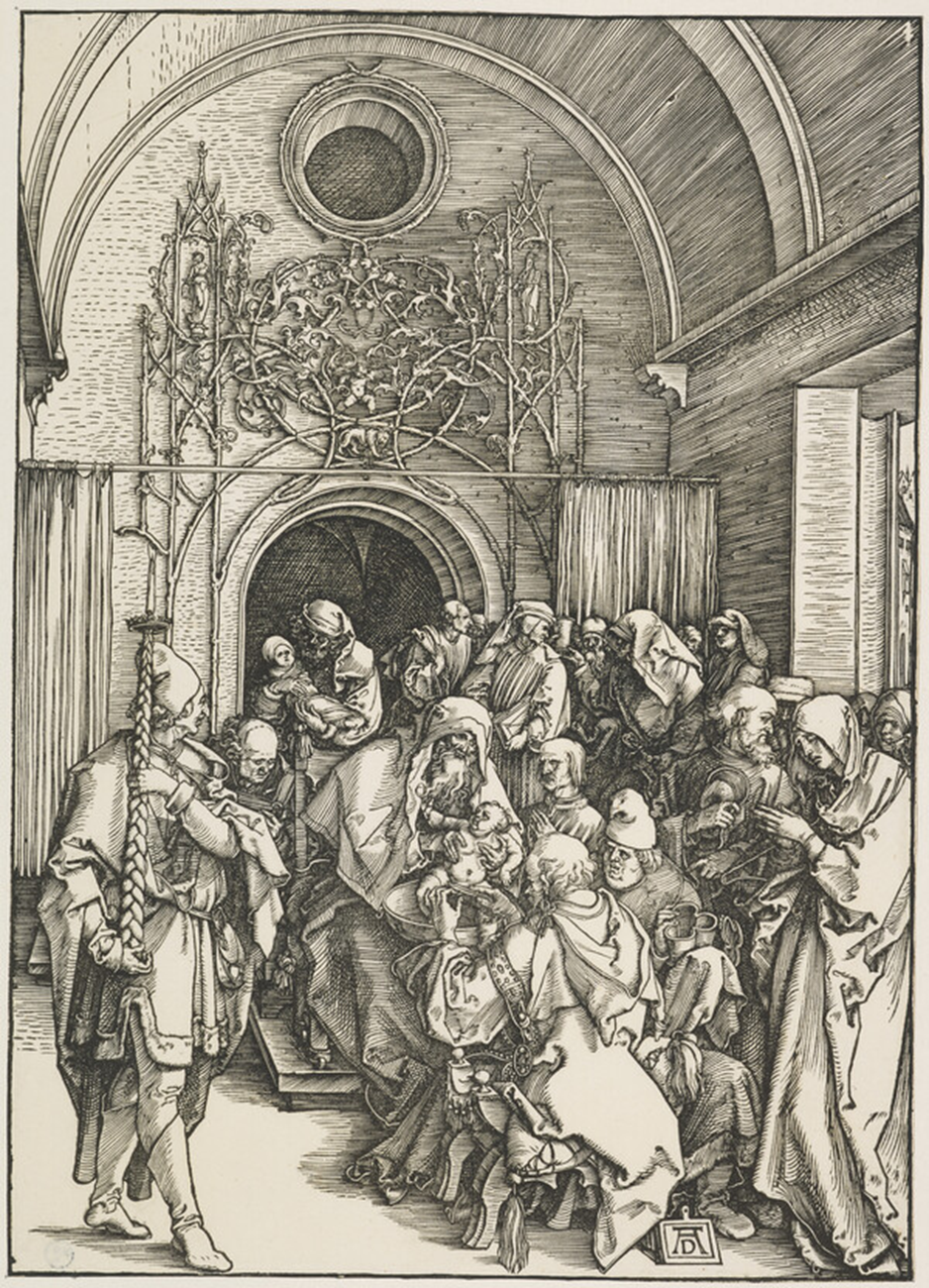
There are quite a lot of artistic representations of the moment in question. Goya, Rembrandt and Dürer all took a pass at it. I particularly like the look of philosophical acceptance on the face of Rembrandt’s baby Jesus.
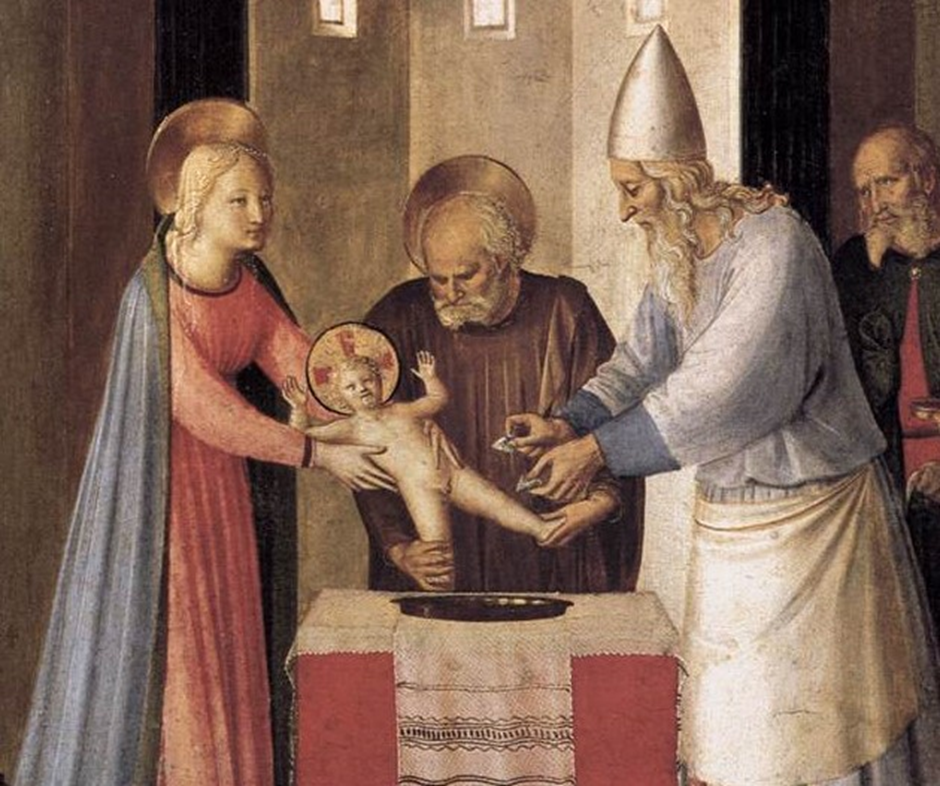
…although I have to say my absolute favourite is Fra Angelico’s, featuring a Jesus who is either rigid with terror, or channelling the spirit of Rowley Birkin QC saying “entombed in ice — like this”.
Anyway, according to the apocryphal gospel of Thomas (quoted in Rag and Bone: A Journey Among the World’s Holy Relics, by Peter Manseau):
…when the time of his circumcision was come, namely, the eighth day, on which the law commanded the child to be circumcised, they circumcised him in a cave. And the old Hebrew woman took the foreskin (others say she took the navel-string), and preserved it in an alabaster-box of oil of spikenard. And she had a son who was a druggist, to whom she said, “Take heed thou sell not this alabaster box of spikenard-ointment, although thou shouldst be offered three hundred pence for it.”
(Spikenard is oil from a Himalayan member of the honeysuckle family, fact fans.) Apparently, he obeyed this instruction. Well, for 33 years he did, anyway. Then, Mary Magdelene nipped out one day to buy some oil to anoint Jesus with, and just happened to find herself in that particular guy’s shop, and bought that exact batch of oil. Which had something bobbing about in it.
Mind you, this is based on the idea that there was just one holy foreskin, when in fact there may have been anything up to 18 of them.
Churches and monasteries throughout Europe – in France, Italy, Germany, Belgium, and Spain – all claimed to have one at various times, never mind that each knew full well about the claims of the others.
In an effort not to entertain the idea that relics might be fraudulent, some ~ahem~ creative thinking was required…
Some medieval commentators went so far as to suggest that the tiny slip of skin multiplied itself — through budding, perhaps, or maybe through some other kind of cellular reproduction more in keeping with its pink and wormy appearance. Others speculated that no replication was necessary; there could easily be numerous authentic relics of the foreskin if the pieces were cut small enough.
The one we’re concentrating on (for now, at least) was kept (according to Marked in Your Flesh: Circumcision from Ancient Judea to Modern America, by Leonard B. Glick) alongside the Holy Umbilical Cord:
It was said that an angel had carried both relics from Jerusalem to the court of Charlemagne … Some popes appear to have been uneasy about claims of this kind; in the early thirteenth century, Pope Innocent III declared that only the Lord knew for certain which relics were genuine. But in the late fourteenth century Saint Bridget (Birgitta), a Swedish nun and mystic, received a vision of the Virgin Mary, who settled such questions, assuring Bridget that the Vatican foreskin and umbilical cord were indeed true remnants of the body of the infant Jesus.
Alternatively, Charlemagne might have been given it not by an angel, but by Byzantine empress Irene of Athens, who wanted to marry him.
Perhaps a severed piece of penis had a different cultural significance in AD 800, but in modern experience it seems an odd engagement present. Charlemagne refused the offer but kept the gift.
Either way, in 1527, Charles V’s army attacked Rome, and one of his soldiers nicked it. He confessed on his deathbed that he’d buried it, so “the pope ordered a search”, which (amazingly) succeeded. (Presumably, sometimes quite specific parts of the Lord move in mysterious ways, their wonders to perform.)
Sure enough, an Italian woman found the reliquary; but as she tried to open the container, her hands stiffened, and she and other witnesses sensed a delightful odour. Finally a young girl (presumably a virgin) succeeded in opening it, and the foreskin was returned to the Vatican.
One of the holy foreskins lived at a monastery in Charroux — a place whose name is said to come from ‘chair rouge’, or ‘red flesh’ (i.e. a foreskin. Obviously.) Pope Clement VII granted indulgences to anyone who went on pilgrimage to see it, so it must have been The One True Foreskin.
Tragically, it was lost during religious wars in the 16th century, when (says Glick) “Huguenots partly destroyed the monastery”, but it was rediscovered in the 19th century. And stolen in the 20th. One assumes the thieves were more interested in what it was kept in, because all these foreskins (like all relics) are remarkable for the precious metal, jewel-encrusted boxes, or reliquaries, they’re stored in. Charlemagne’s holy foreskin was in an ornate one in the form of a cross.
Mind you, the bishop who preached a sermon over the Charroux prepuce in 1862 after its rediscovery said “he had perceived on the foreskin some of the Saviour’s coagulated blood”, so perhaps it was stolen to order by a forerunner of the kind of unfeasibly rich weirdo who has an interest in eternal life…
Yet another noteworthy foreskin resided in the Benedictine abbey of Coulombs, near Chartres. In 1421, it travelled to England when Catherine of Valois married Henry V, to be placed in the marital bed as a fertility charm!
(Well, that certainly would have livened up those scenes with the French princess at the end of Kenneth Branagh’s Henry V film.)
My personal favourite was kept in the Italian hill town of Calcata, which also claimed to be the one looted from the Vatican’s Sanctum sanctorum in 1527, except this one was rediscovered in 1557, rather than the 1800s, because the soldier in this version of the story had been caught and imprisoned in Calcata, and buried the reliquary in his cell. That meant, of course, that this was The One True Holy Prepuce, so the town had a procession on the feast of the foreskin — 1 January, the anniversary of the circumcision itself. Carrying a holy foreskin through the streets meant pilgrims — and to a small, isolated town up a big hill, that meant cash.
So, when Charroux ‘discovered’ theirs, each town got jolly cross with the other, and the Vatican was forced to adjudicate. It did this by spoiling everyone’s fun and declaring in 1900 that “that anyone who wrote about or spoke the name of the holy foreskin would face excommunication”. We can’t have people thinking about Christ having genitals, you see. Not the done thing.
In 1960, Pope John XXIII reformed the General Roman Calendar, and changed the 1 January feast from ‘Circumcision of the Lord and Octave [eighth day] of the Nativity’ to just ‘Octave of the Nativity’, so obviously Calcata just went on having their procession anyway.
Perhaps it was the rebellious spirit of the town which drew the author of that Slate article, David Farley, to make a whole documentary about it for National Geographic, which is one of the best things I’ve watched this year.
<a href="https://medium.com/media/44a0e28a9a6f8107510c2277f64d967f/href">https://medium.com/media/44a0e28a9a6f8107510c2277f64d967f/href</a>
I mean, it has this guy in for starters:
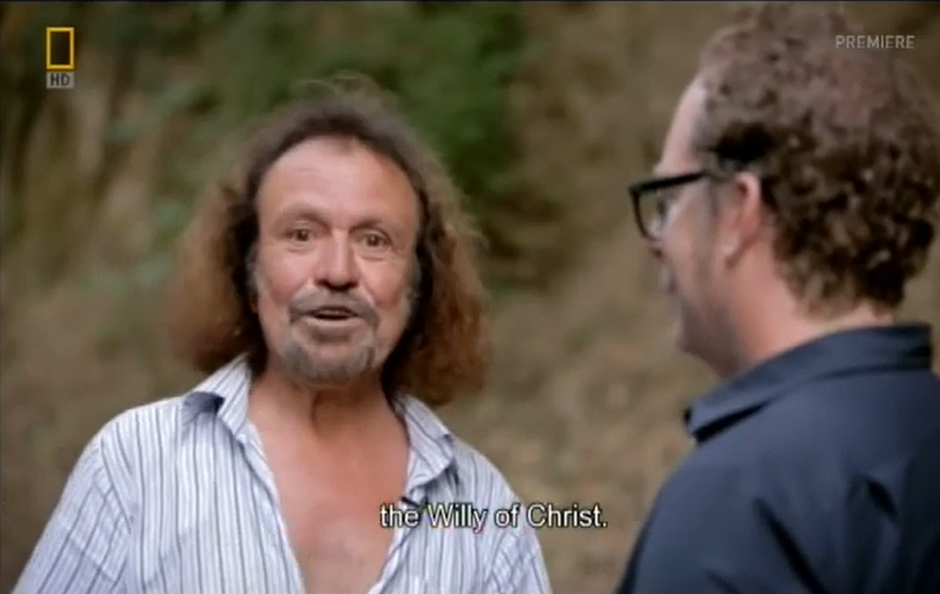
(Can we have a round of applause here, incidentally, for Richard Francis on Bluesky, who observed: Really hope the following dialogue in that scene is “compels you”.)
Tragically, although Calcata’s priest kept the precious object very securely — in a shoebox at the back (or on top) of a wardrobe — it was nicked in 1983. Apparently, he showed it to a “mysterious foreign couple dressed in black” one day, and then went on official business to Rome. When he returned, his house had been ransacked, and the foreskin was gone.
The townsfolk are having none of this. One says the official version is “the relic was stolen by Satanists who wanted it for a black mass” — a story “not accepted by anybody with a little bit of common sense”. Also, “no journalist has ever found evidence of a report to the police”. Yes, basically, there is no story so silly that people cannot make more silly with a conspiracy theory, and lots of people think the priest took it to Rome to be hidden or destroyed, and fabricated the story of the theft.
And if you think that’s absurd, in times gone by there was a whole theological/philosophical debate about what happened to the Holy Prepuce when Jesus rose up to heaven to sit at the right hand of the Father. Did the severed bit of his willy remain on Earth, or did it hear the call and ascend as well…? This was all answered in the 17th century, apparently, when
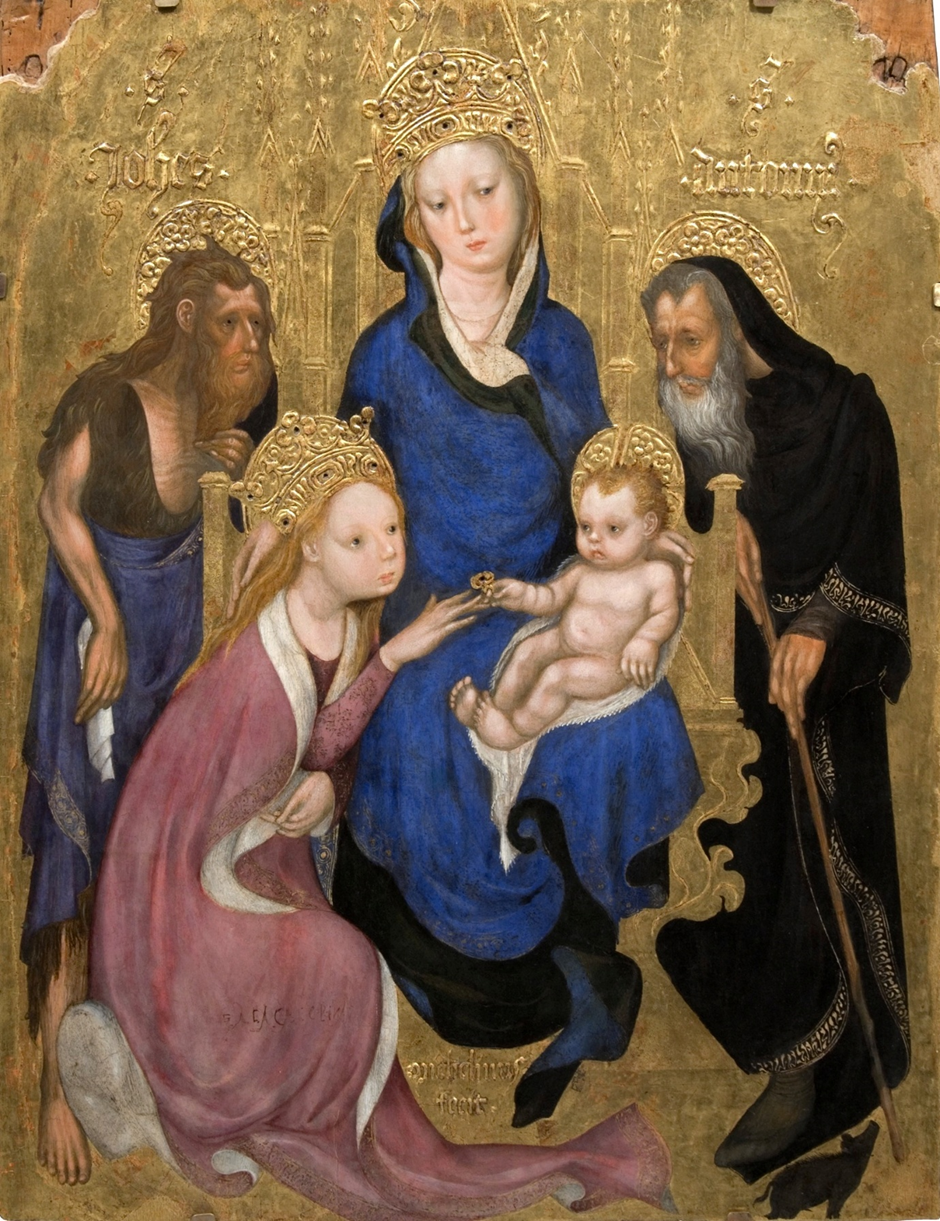
Oh, of course! I feel silly now that I didn’t think of that. Mind you, that would mean that none of the holy foreskins was the real one, and we’re not at home to Dr Killjoy, so let’s dismiss that and move on to 14th-century mystic St Catherine of Siena, who married Jesus (in some paintings, when he was a baby) “not with a ring of silver but with a ring of his flesh”.
Mind you, she’s not a patch on Agnes Blannbekin (this is again from Leonard Glick’s Marked in Your Flesh book)…
…a late thirteenth-century Austrian mystic, [who] had an even richer imagination. Although she ate no meat, she described a vision in which she swallowed Jesus’s foreskin: “She feels a small membrane on her tongue, like the membrane of an egg, full of exquisite sweetness”; and “so great was the sweetness at the swallowing of this membrane that she sensed a sweet transmutation through the muscles and organs of her whole body.”
…or (back to Peter Manseau’s Rag and Bone) Saint Birgitta of Sweden:
who in her popular Revelations said it was worn by the Virgin Mary as jewelry all the days of her life. The Virgin Mary told Birgitta this herself in a vision. Before her ascension to heaven, she explained, she took her murdered son’s foreskin from her neck and presented it to Saint John the Evangelist, who in turn passed it along to his community of disciples.
The Calcata foreskin even turns up in Ulysses, when Stephen Dedalus and Leopold Bloom take a leak together in the latter’s garden, prompting each to have thoughts about the other’s old chap:
What different problems presented themselves to each concerning the invisible audible collateral organ of the other?
To Bloom: the problems of irritability, tumescence, rigidity, reactivity, dimension, sanitariness, pelosity. To Stephen: the problem of the sacerdotal integrity of Jesus circumcised (1st January, holiday of obligation to hear mass and abstain from unnecessarily servile work) and the problem as to whether the divine prepuce, the carnal bridal ring of the holy Roman catholic apostolic church, conserved in Calcata, were deserving of simple hyperduly or of the fourth degree of latria accorded to the abscission of such divine excrescences as hair and toenails.
Basically, there are even more stories about the Holy Foreskin than there were Holy Foreskins, and you could probably devote a lifetime to the study of and quest for this/these most sacred of objects if you so chose — and I don’t. Sorry. Apparently, though, Miles Kington made a documentary on the subject in the 1990s, and if anyone in TV wants to fund me, I’ll happily go to Italy and make one of my own.
But perhaps we should just be content with what we have so far. That National Geographic doc, after all, has one of my favourite bits in all of this nonsense, when presenter David Farley goes back to the issue of the fleshy nature of The Foreskin of Our Lord and the blood which may or may not be contained within it or adhering to it, and asks whether the Holy Prepuce could contain the DNA of God, making it possible to clone Jesus, to which an Actual Scientist replies:
yes, theoretically
…and if that isn’t Dan Brown’s next novel, he’s missing a trick, and I’ll bloody well write it myself.
Happy Christmas!