Rhubarb for purposes unknown
12 June 1923

Well, it’s 12 June, so it must be 103 years to the day since Edith Sitwell sat behind a curtain at London’s Aeolian Hall, reciting bizarre poetry through what looked like a traffic cone, prompting Noel Coward to take the piss, which started a four-decade feud between them.
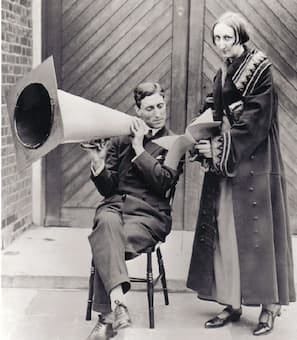
This was the first public performance of Façade – An Entertainment, in which Sitwell’s modernist poems were recited with a musical accompaniment composed and conducted by William Walton, from behind a decorated cloth, so the reader’s personality wouldn’t “invade” the poems. (Alternatively, they might have got the idea of the curtain from Jean Cocteau, or they might have taken one look at the ‘sengerphone’ and decided that if the audience saw it, there might be more hilarity from the performance than was intended.)
Because people were supposed to be entertained. They just weren’t supposed to laugh at the performance. Unfortunately, this is the kind of thing she was intoning
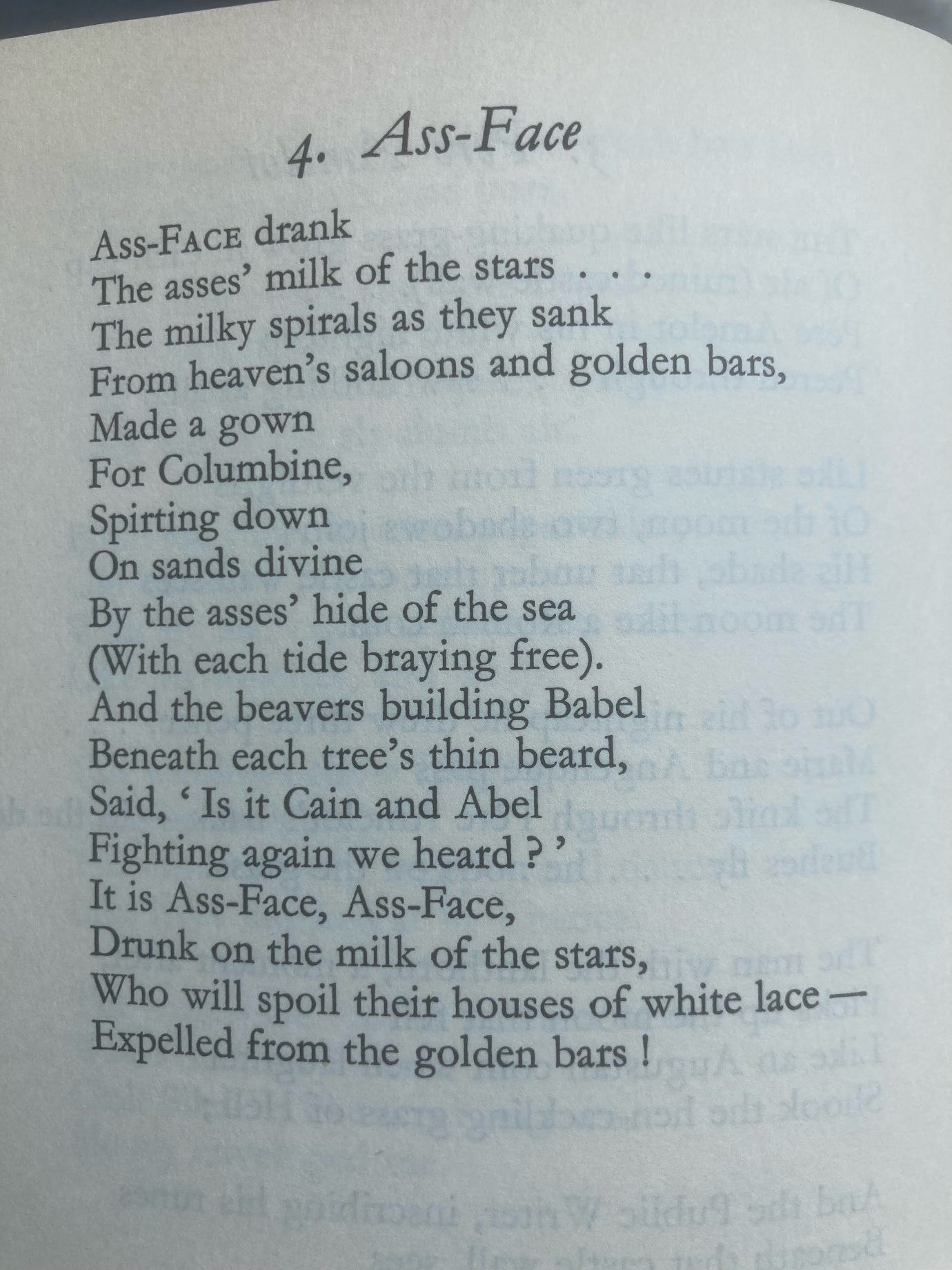
Admittedly this, from a poem called The Drum, has a certain Under Milk Wood quality to it…
In his tall senatorial,
Black and manorial,
House where decoy-duck
Dust doth clack –
Clatter and quack
To a shadow black
…but Trio for Two Cats and a Trombone is frankly a bit silly:
LONG steel grass –
The white soldiers pass –
The light is braying like an ass.
See
The tall Spanish jade
With hair black as nightshade
Worn as a cockade!
Flee
Her eyes’ gasconade
And her gown’s parade
(As stiff as a brigade).
Tee-hee !
It is modernist, yes, and you are supposed to enjoy the sounds and rhythms more than you search for meanings, but… well, you can get a sense of what that audience might have encountered from a later recording, and make your own judgment:
The reviews, according to Victoria Glendinning’s Edith Sitwell – A Unicorn among Lions, were not kind. “The Daily Graphic’s critic … under the heading ‘Drivel They Paid to Hear,’ reported that:
a friend of mine who was there tells me that, when he laughed, as Edith Sitwell recited drivel through a megaphone, a woman turned round and said, “How can I study a new art if you laugh?” That sums up the whole performance. If three had laughed, the Sitwells wouldn’t dare to do it again.... Surely it is time this sort of thing were stopped.... Grant Richards wore a white carnation specially for the occasion; his son wore another carnation. But otherwise it was all dreary and hopeless.
It was Osbert who invited Noel Coward to the fateful first performance, saying to the up-and-coming writer, “I hear you’re doing a revue. What *fun*!” and then invited him to Façade because “it might give you some ideas”. Well, it did...
His revue, London Calling!, opened in the West End that September, and featured a sketch, The Swiss Family Whittlebot, in which Hernia Whittlebot, aided by her brothers, Gob and Sago, recited terrible poetry over awful music.
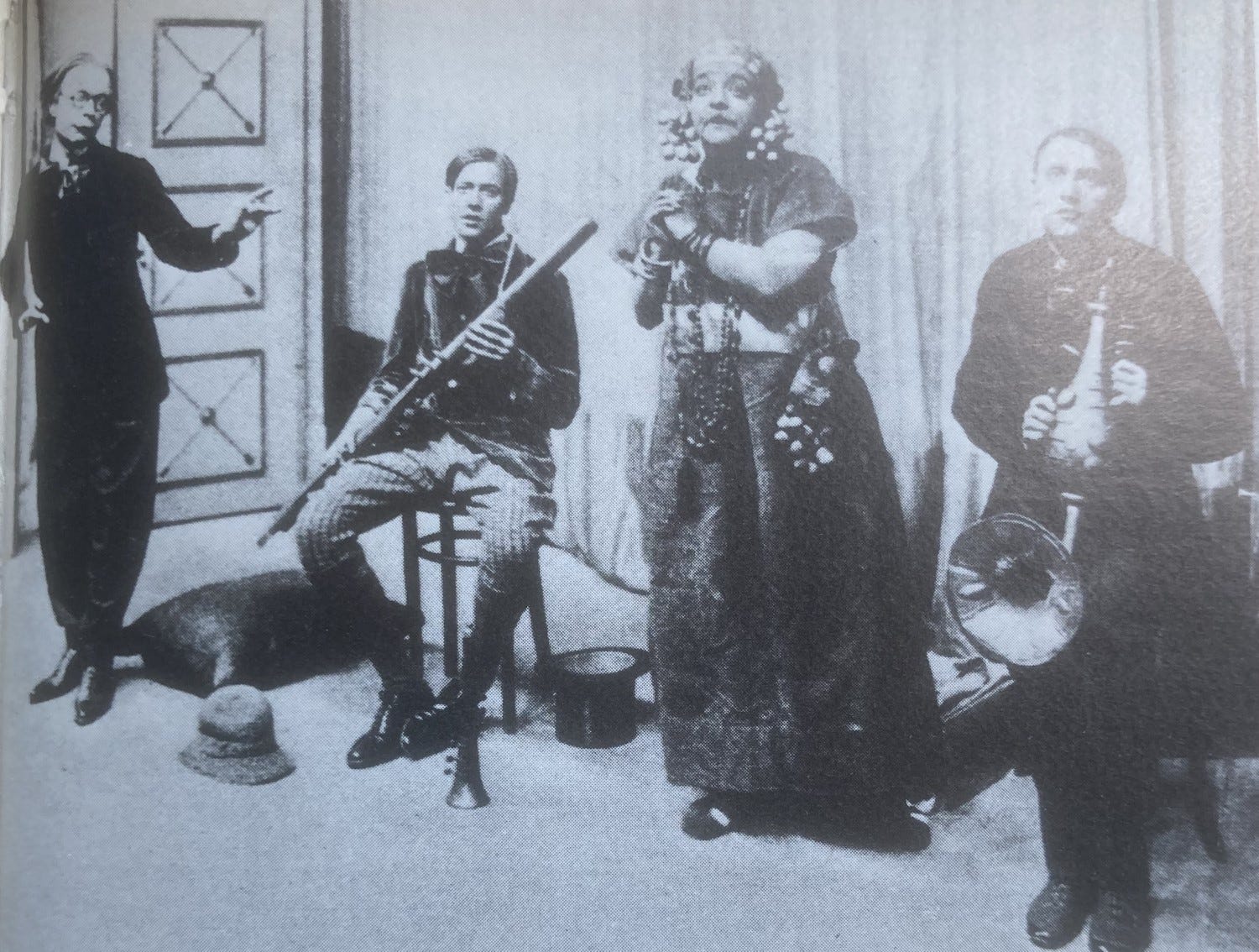
The Sitwells had been hoping to cause a stir, and London Calling! was a resounding hit, so they did indeed find themselves on the cultural map in a way they hadn’t been before – just not in the way they wanted. Edith wrote to her friend Harold Acton about it:
I am feeling miserably disappointed. . . . Osbert . . . tells me it is impossible for me to do Façade at Oxford. He says . . . that after London Calling I cannot risk it, as probably little Coward’s supporters (being far in excess of intelligent people in number) would flock to the performance to insult me, and that it would be too undignified to expose oneself to it.
Edith wasn’t humourless. The poems were meant to be funny, and she told a later interviewer that
I can’t wear fashionable clothes... I’m a throwback to remote ancestors ... if I wore coats and skirts ... people would doubt the existence of the Almighty.
But London Calling! upset them. When ‘Hernia’ recites a poem called ‘The Lower Classes’, “Melody semi-spheroidal / In all its innate rotundity / Rhubarb for purposes unknown”, the family is pushed off stage, and the orchestra given a signal to start the next number. Edith also became convinced – not on the basis of a great deal of evidence, it must be said – that the sketch was “of the utmost indecency – really filthy”, and implied that she was a lesbian. Osbert wrote Coward a magnificently angry letter.
We are delighted to have been the means of suggesting an idea to you. It is always as well to have one, even if it isn’t your own; it must be a novel experience to you. All you want, now, is a little self-confidence - and, of course, to use your voice more. Insulting my sister is a fine beginning for you. We look forward to other triumphs. Have you tried cheating at cards?
...and the feud was still simmering in 1947 when Queen Elizabeth – who was friends with both men – invited them to the same reception with a view to stilling the tempest. It was a limited success. Osbert wrote to a friend:
The brute apologised to me the other day, and as I was in a good mood, I forgot to kick him downstairs - it was on the staircase at Buckingham Palace - and as my sister magnanimously says she’ll let bygones be bygones, I suppose I had better cut out the insults. . . . I really am loath - or is it loth? - to cut; but there it is!
Coward had written to Edith in 1926 to apologise, and received a response which read, in full: “Dear Mr. Coward, I accept your apology. Yours sincerely, Edith Sitwell”. But finally, in 1962, reconciliation was brought about by the unlikely figure of George Cukor. Two years before he directed My Fair Lady, Cukor was the dedicatee of Edith’s last volume of poems, which Coward enjoyed, but
was afraid to write to Edith about it. Cukor encouraged him to do so. She responded with a telegram (”Delighted stop friendship never too late....”), they exchanged letters, and finally he came to Greenhill, where she received her visitors from her wheelchair, in a hat and a short fur coat whatever the weather, and bedroom slippers. Coward, who had an eye infection, wore dark glasses. He apologized for his mockery of Façade all those years ago. He had been so young, he said; he had not understood. Then they gossiped, making up for forty lost years.
So, all was well that ended well, but I still think this is a bit silly.
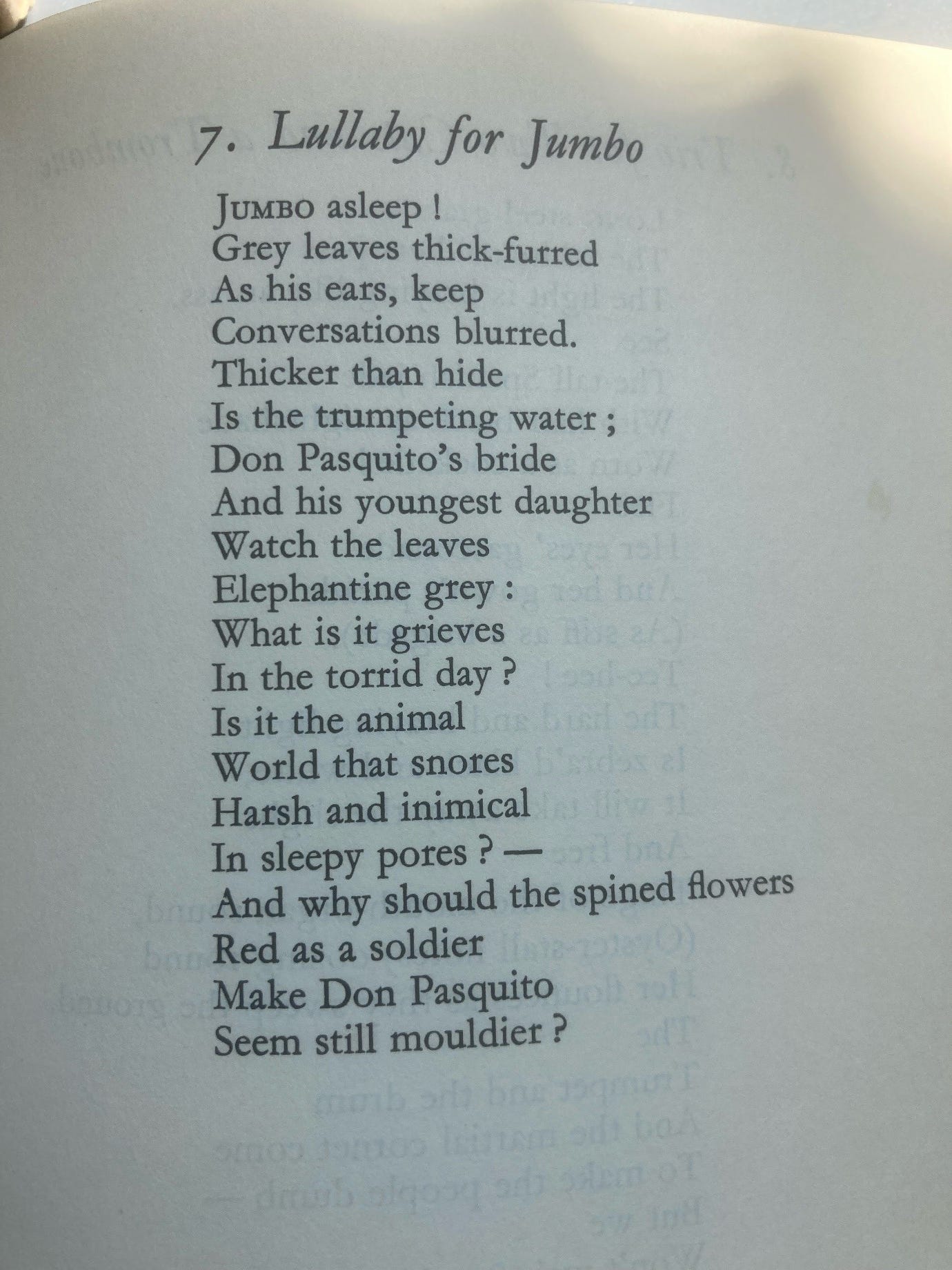
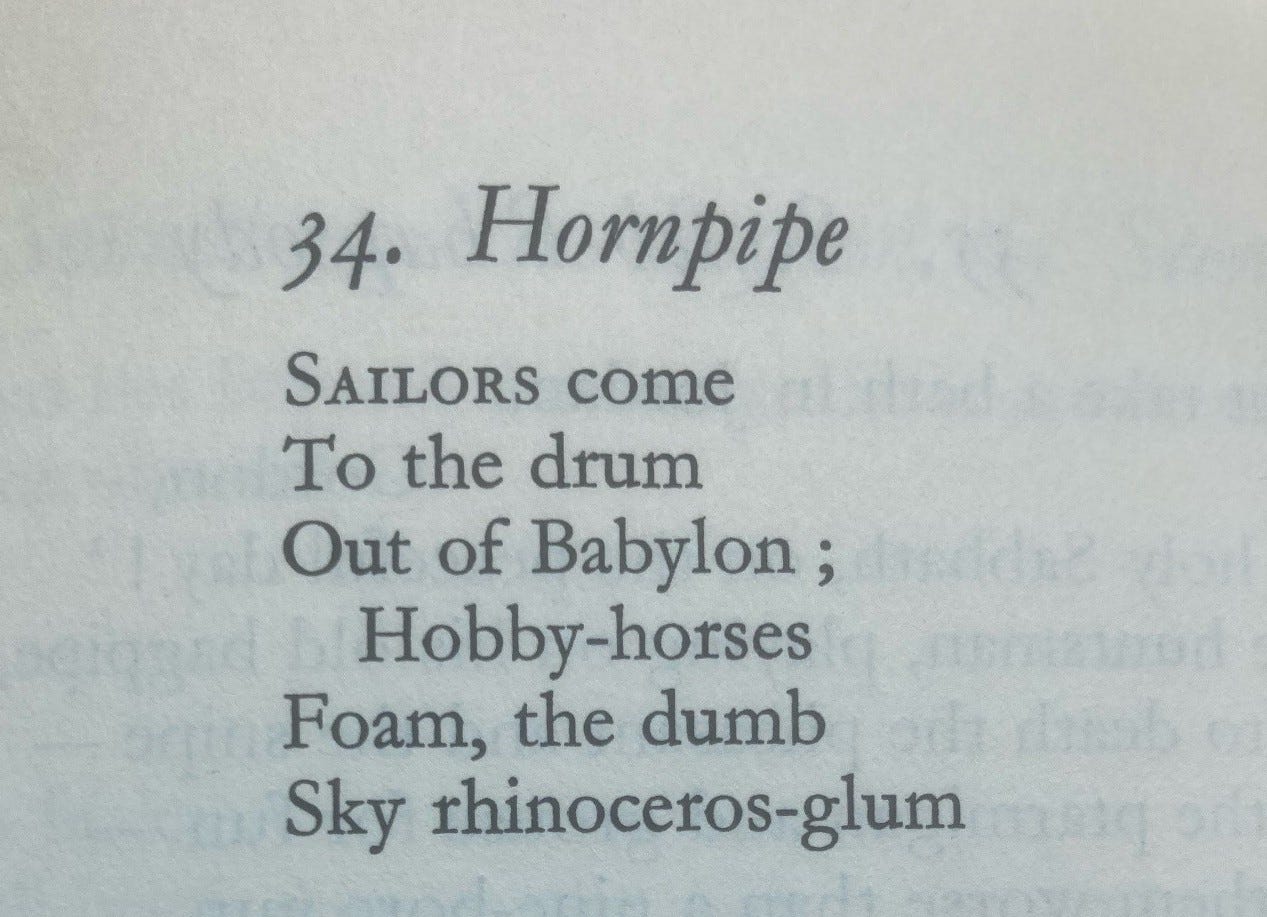
...and – each to their own and all that – but this?
Still, how much duller would the 20th century have been if it hadn’t had the Sitwells in it? I mean, who wouldn’t want to track down the 200th edition of This Is Your Life, in which one of the unlikeliest ever victims was surprised by Eamonn Andrews? I know I bloody would.
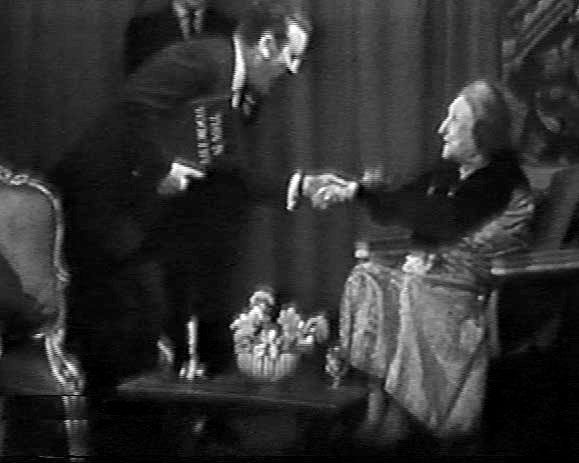
All I’ve been able to find of it is this.