The Stompanato saga
4 April 1958

It’s the 68th anniversary of the fatal stabbing of mob enforcer Johnny Stompanato. Famously, it wasn’t a rival mobster who did him in in some creative, Godfather-like way, but Lana Turner’s 14-year-old daughter Cheryl Crane, who stabbed him for beating up her mother. Probably...
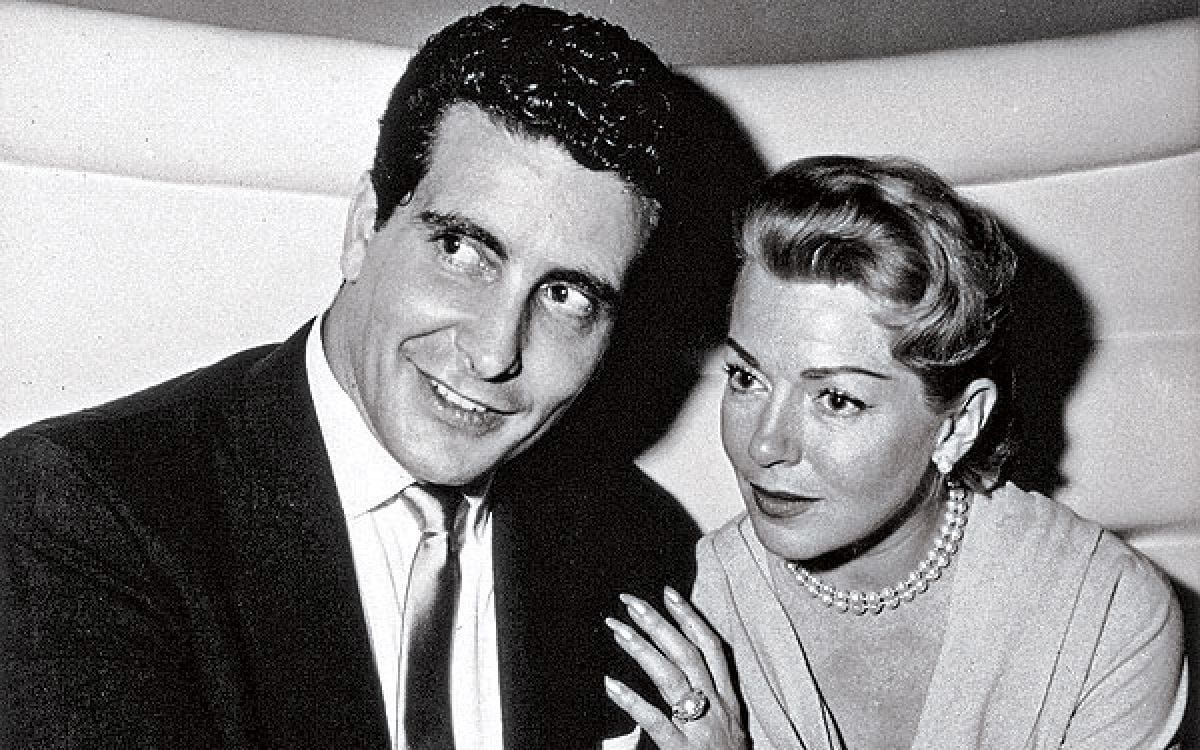
Essentially, the story is that Stompanato was exactly the sort of man you’d expect him to be, and a few days earlier had beaten Turner up because she went to the Oscars without him (on the grounds that dating a gangster was bad for her image) and stayed out late afterwards, committing the unforgivable sin of enjoying herself.
On the night of 4 April 1958, they argued, and Stompanato (as was his habit) became violent and threatening. Cheryl armed herself with a kitchen knife and
when her mother’s bedroom door opened and she thought Stompanato lunged at Turner, Crane moved towards him.
(Most sources on this are sensationalist nonsense, but that’s from historian Ruth Feldstein’s Motherhood in Black and White – Race and Sex in American Liberalism, 1930-1965, based on the accounts she could find, including media reports at the time, and the memoirs of the two women.)
Gaby Wood, writing in Granta in 2004, is one of several people who have noted that this might be described as a convenient explanation. Turner’s career had been faltering, she’d been dating a gangster, and it wouldn’t do her any good if she killed a man even in self defence.
This is what Lana and Cheryl told Clinton Anderson, the Beverly Hills chief of police, when he arrived an hour and a half later. Anderson said their stories matched exactly. In the 1980s, Lana and Cheryl both wrote memoirs; their stories still matched.
Wood also notes that in the 90 minutes between Stompanato’s aorta being punctured and the top cop arriving, “the two women were joined by six other people, not counting the corpse”: Cheryl’s father, Lana’s mother, and a doctor, initially – and the latter suggested they call prominent lawyer Jerry Giesler...
Giesler was nicknamed ‘the magnificent mouthpiece’; he had got Errol Flynn cleared of two rape charges and Bugsy Siegel cleared of murder. He arrived with a private eye, Fred Otash, who was a former vice cop and fed stories to Confidential magazine on the side. By now the house was surrounded-by medics, policemen and neighbours in bathrobes – but one last person made it into the bedroom before Anderson: James Bacon, a journalist who slipped through by pretending he was the coroner’s assistant.
The body had almost certainly been moved, and the knife probably wiped, so there was gossip, but a “near-riotous” coroner’s inquest heard four hours of testimony and took about 25 minutes to find that Cheryl had committed justifiable homicide. And, honestly, who cares who did it?
There are times when it is challenging to agree with John Donne’s assertion that “Any man’s death diminishes me, / Because I am involved in mankind”, and this is one of them. (And there’s no contemporary resonance here. Good heavens, no. Anyway...)
One of the intriguing things that happened afterwards was that Sean Connery had to go into hiding, despite being nowhere near the house that night. But he had made a movie with Turner in 1957 – which led to a run-in with the former bodyguard to mobster Mickey Cohen. Hearing rumours about Connery and Turner enjoying love scenes off camera, Stompanato flew to England, where his girlfriend told him to stay away from the set.
Stompanato ignored her and showed up at the studios in Borehamwood, Hertfordshire, where Turner and Connery were filming. He caught a scene where the pair were embracing on a couch. After a few retakes, he walked into the frame, pointed a pistol at Connery, and told him to take his hands off Turner. The future Bond grabbed the enforcer’s wrist in a swift move, twisted it until the gun came loose, and then decked him with one punch.
Cohen was apparently convinced that Lana Turner had killed Johnny, and “vowed revenge on anyone who had anything to do with his former bodyguard’s death”, and some of Stompanato’s letters – published after the killing – mentioned Connery.
You might want to say something here along th lines of “he pulls a gun, you deck him with one punch – that’s the Connery way”, as if the built-like-a-brick-shithouse Scotsman is the uncomplicated hero in all of this, but he was a practitioner and advocate of hitting women himself. In fact, when he did the interview in which he said it was OK to slap a woman, a former partner, Lynsey de Paul, who’d never spoken publicly of their affair, sold her story and gave the money to a women’s refuge. That’s the Chiswick way...
Anyway, a sturdy Scottish actor staying at the swanky Hollywood Roosevelt while making, of all things, Disney’s Darby O’Gill And The Little People, was told to “get out of town”, and “checked into the San Fernando Valley’s cheap Bel Air Palms Motel until the heat was off”.
Cheryl went to live with her grandmother, and Lana Turner (who had never ben noted for her understated performances) took the lead in the melodramatic Imitation of Life (about an actress who gives up her daughter and the man she loves for her career) for a smaller than usual fee and a massive percentage of the profits – and made a ton of money. And presumably I don’t need to tell you where Connery’s foray into Oirish Whimsy led him.